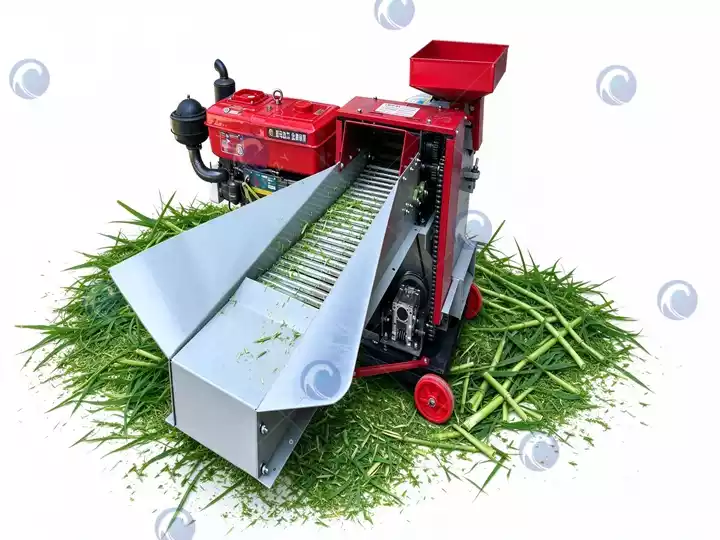
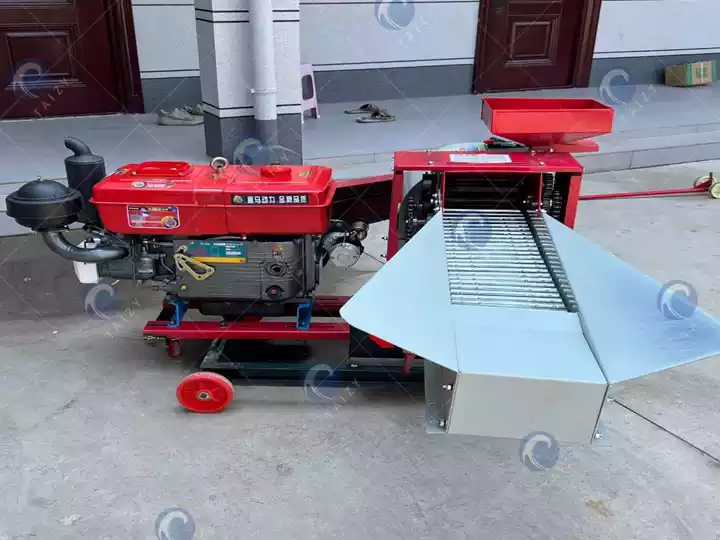
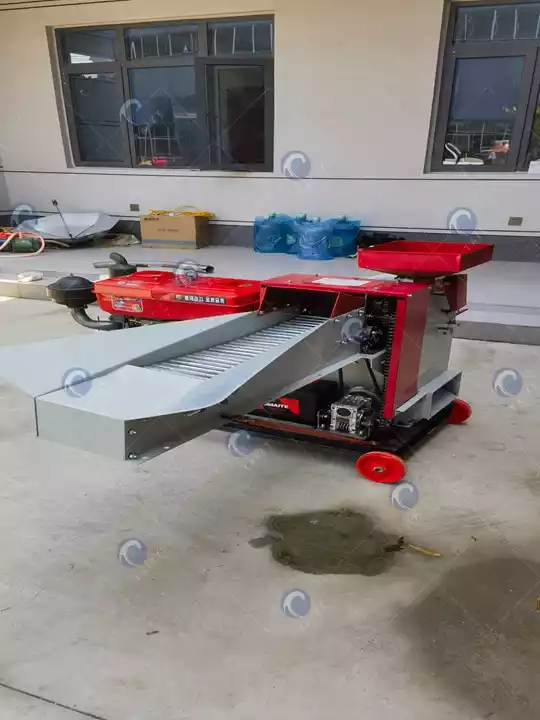
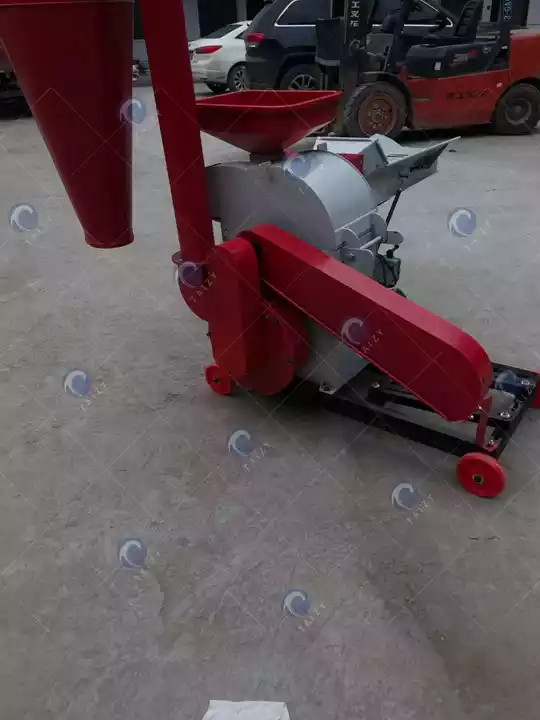
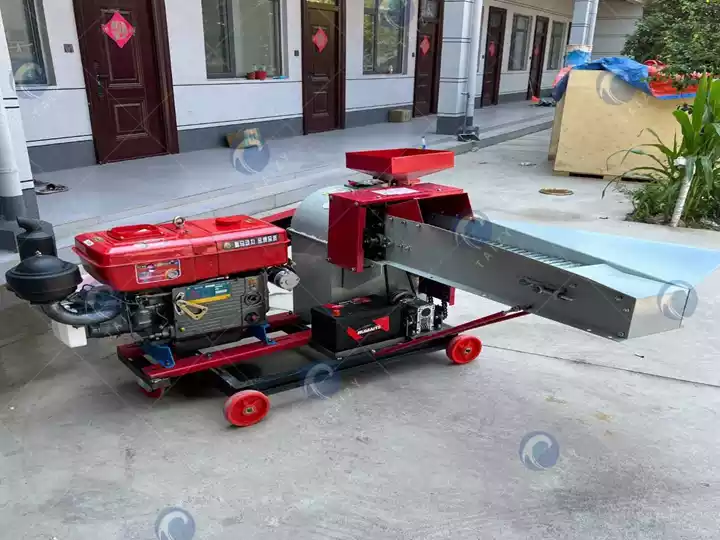
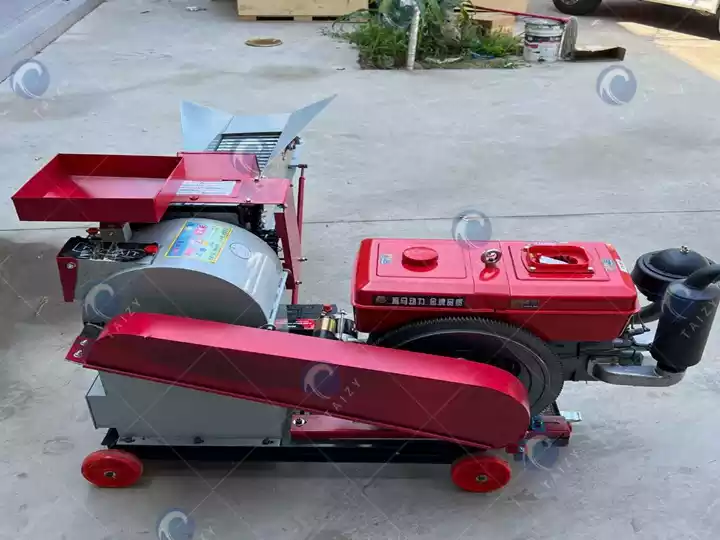
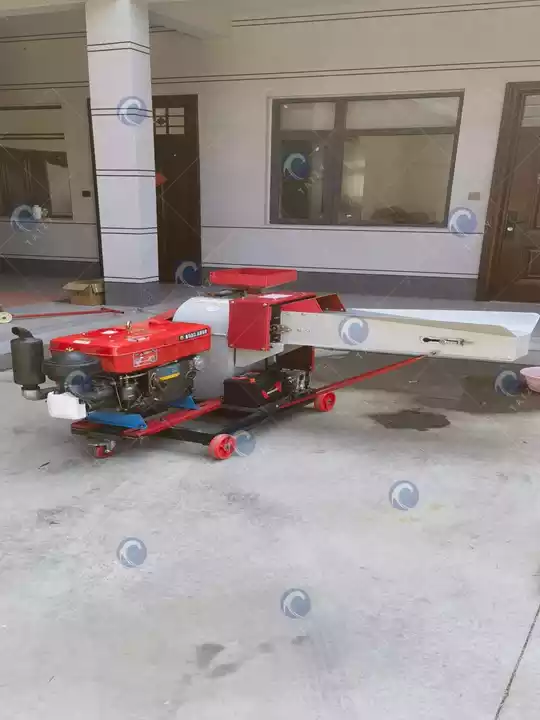
The 9RS-1500 silage chopper machine is a combined forage chopper and grain crusher that turns fresh grass, hay, straw, corn stalks, corn cobs and cereal grain into fine, uniform feed in a single pass.
The 9RS-1500 silage chopper machine is a combined forage chopper and grain crusher that turns fresh grass, hay, straw, corn stalks, corn cobs and cereal grain into fine, uniform feed in a single pass. It is built for daily silage making and green fodder preparation on dairy, cattle, sheep and goat farms, and it also crushes maize and soybeans into meal for wet mash feeding.
Driven by a 7.5 kW electric motor or a 15 HP diesel engine, the silage chopper machine delivers a rated capacity of 1–1.5 t/h — enough to keep a medium-size herd fed without hiring extra labor.
Most farms used to buy two machines: a chaff cutter for long forage and a hammer mill for grain. The 9RS-1500 does both jobs in one compact trailer unit.
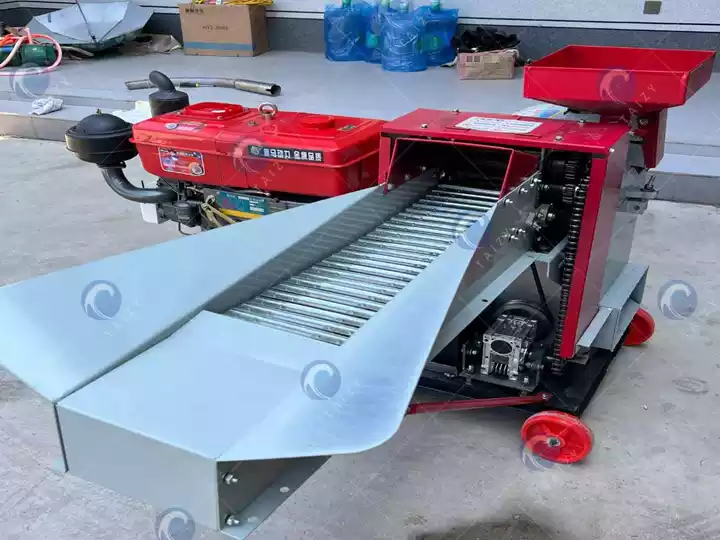
Loading. Fresh grass, hay or corn stalks are placed on the wide slat conveyor. The conveyor pulls material into the chopping chamber at a steady speed, so long, tangled grass feeds smoothly instead of blocking the inlet.
Chopping and crushing. Inside the chamber, a high-speed rotor with hardened steel blades cuts the material and beats it against the housing. Grain dropped through the top hopper is crushed by the same rotor, which is why one machine handles both roughage and concentrate.
Sizing and discharge. A perforated screen under the rotor decides the final particle size. The blower then throws the finished feed through a cyclone outlet, filling a silage pit, a trailer or a feed trough directly — no second lifting step and very little dust.
The result is a soft, moist, easy-to-eat pulp that packs well for silage and mixes easily into a total mixed ration (TMR).
Silage Chopper Machine Key Specifications at a Glance
Model: 9RS-1500 silage chopper machine
Type: Combined silage chopper and corn crusher, trailer-mounted
Power options: 7.5 kW electric motor, or 15 HP diesel engine
Capacity: 1–1.5 t/h (rated; actual output depends on material, moisture and screen size)
Overall weight: 310 kg
Dimensions: 1800 × 1600 × 1150 mm
Feeding system: Slat conveyor for long forage + top hopper for grain
Discharge: Blower with cyclone outlet
Screens: Interchangeable perforated screens for different particle sizes
Mobility: Four-wheel chassis with tow bar, one person can move it
Raw Materials Silage Chopper Machine Handles
The 9RS-1500 silage chopper machine is deliberately versatile, because feed costs on a real farm change with the season.
Fresh green forage: napier grass, king grass, alfalfa, ryegrass, clover, sweet potato vines, vegetable residues.
Hay and dried forage: alfalfa hay, mixed hay, bale-broken grass.
Grain and concentrate: maize (corn), sorghum, soybean, wheat, beans — crushed into meal for mash.
Root and tuber crops: cassava, sweet potato and potato, chopped into pulp.
strawhay
For silage making, aim for a moisture content of roughly 65–75 %. Fresh grass at that moisture chops into a pulp that compacts well and ferments cleanly; material that is too dry comes out dusty and is harder to pack.
Silage Chopper Machine Main Features That Save Time and Labor
Two machines in one. Chopping and crushing share one rotor, one frame and one power unit, which cuts both purchase cost and floor space.
Slat conveyor feeding. Long grass and stalks are drawn in automatically, so the operator loads instead of pushing material by hand — faster, safer and more consistent.
Electric or diesel power. Run the 7.5 kW motor in a fixed feed barn, or fit the 15 HP diesel engine for field work and areas without a reliable grid.
Interchangeable screens. Change the screen to move from fine mash for silage and pigs to a coarser chop for cattle and sheep.
Blower and cyclone discharge. Feed is thrown high into a pit, cart or bunker, which saves one manual handling step on every load.
Compact and mobile. At 310 kg on a four-wheel chassis with a tow bar, the machine moves between barns, fields and silage pits by hand or behind a small tractor.
Simple maintenance. Belt drive, accessible rotor, bolt-on screens and sealed bearings keep daily checks short and spare parts cheap.
Typical Applications on Real Farms
Dairy farms: fresh grass and corn silage chopped fine and mixed into TMR to improve intake and milk yield.
Beef cattle and feedlots: corn stalks, straw and grain processed on site to lower purchased feed costs.
Sheep and goat farms: soft, short forage that reduces sorting and waste at the trough.
Silage production: fresh grass, whole-plant corn and crop residues chopped and blown straight into a silage pit or trailer.
Pig and poultry units: maize, sorghum and soybean crushed into meal for wet mash.
Small feed businesses and cooperatives: one unit serving several nearby farms, or a rental service during harvest.
Electric Motor or 15 HP Diesel: Which One Fits Your Farm?
Choose the 7.5 kW electric motor if you process feed at a fixed location with a stable power supply. The electric version runs quieter, needs no fuel, and costs less per tonne of feed — ideal for a daily feeding routine in a barn.
Choose the 15 HP diesel engine if you work in the field, move between silage pits, or farm where the power supply is unstable. The diesel unit is fully independent and keeps torque up when the material is heavy and wet.
Many buyers order the diesel model first and add the motor later, since both mount on the same chassis. If you run the machine more than four hours a day, the electric version usually pays back its price difference within one or two seasons.
The screen is the single setting that changes the product most.
Fine screen: soft pulp for silage, pig and poultry mash, and young stock. Lower throughput, higher feed conversion.
Medium screen: the everyday setting for dairy TMR and sheep feed — short enough to mix, long enough to keep rumen function healthy.
Coarse screen: longer chop for cattle, bedding mixes and material that will be re-processed later.
Two practical rules: use a coarser screen when the material is wet and heavy, and never force material through a screen that is too fine — throughput drops and the rotor works harder than it should.
Silage Chopper Machine Operating and Maintenance Tips
Place the machine on level ground and chock the wheels before working.
Check engine oil, fuel and belt tension before every start.
Feed the conveyor evenly. Sudden overloads slow the rotor and produce uneven chop.
Keep stones, wire and metal out of the hopper — they damage blades and screens faster than anything else.
Never reach into the conveyor or chopping chamber while the machine is running.
Grease the bearings regularly, and clean the screen after every wet batch so it does not blind over.
Replace or re-sharpen blades when the chop becomes ragged; sharp blades cut faster and use less fuel.
Store the machine under cover, and drain the engine according to the manual before long storage.
Silage Chopper Machine FAQs
Can one machine chop grass and crush corn?
Yes. Long forage goes in through the slat conveyor, grain goes in through the top hopper, and both are processed by the same rotor. Switch screens between jobs for the best result.
Can I use it without electricity?
Yes. The 15 HP diesel version runs completely independently, which makes it suitable for field work and areas with an unstable power supply.
How much does a silage chopper machine cost?
Price depends on the power option (7.5 kW electric motor or 15 HP diesel engine), the screen set and the shipping terms. Request a quote with your farm size and material so the configuration matches your work.
Is it suitable for a small or medium farm?
Yes. At 310 kg with four wheels and a tow bar, it is easy to move and needs only one operator. A 1–1.5 t/h output covers the daily feed needs of a medium herd and can also serve neighboring farms.
Silage Chopper Machine supplier
Get a Factory Quote for the 9RS-1500
Tell us your material (fresh grass, hay, corn stalks or grain), your daily volume and whether you prefer electric or diesel power. We will confirm the right screen set, the packing dimensions and the shipping cost to your port, and send a quotation within one working day.
To build a complete silage processing line, we also supply silage baler and wrapper machine. After being chopped by this silage chopper, the forage can be directly fed into the baler wrapper for automatic baling and film sealing. This matched combination helps lock nutrients, avoid spoilage, and makes silage easy to store and transport. Contact us to get the full silage solution.
A potato harvester machine is a tractor-driven implement that digs potatoes from the soil, lifts them onto a vibrating chain, separates them from dirt, stones and vines, and then lays them in a narrow windrow or loads …
Automatic drum seeder machine is a full‑automatic nursery seeding unit integrating substrate filling, hole dibbling, precision seeding and soil covering in one continuous workflow.
The Manure spreading machine is a tractor-powered fertilizer application machine used to transport and evenly distribute livestock manure, compost, organic fertilizer, and other solid or granular fertilizers across …
Looking for a reliable Corn Thresher Machine? The wet and dry maize thresher delivers 20-30 tons per hour, handles both wet and dry corn, and ships worldwide. Get a free quote today.
A hay bale crusher can shred, crush, and process round or square bales of straw, hay, corn stalks, peanut vines, and other crop residues into uniform short fibers (3–10 cm).
The silage harvester integrates three functions: harvesting, chopping, and loading, and is specifically for efficiently processing silage raw materials such as corn and Napier grass (2.5-3 meters).
La machine d'enrubanneuse-presse à balles rondes 9YDB-90 est une machine intégrée de pressage et d'enrubannage de balles rondes avec un rendement horaire de 55 à 60 balles.