How to Choose a Complete Feed Pellet Production Line?
Choosing a complete feed pellet production line is an important decision for farms, feed processing businesses, and livestock enterprises. A suitable production line can turn different agricultural materials into uniform feed pellets while improving production efficiency and reducing manual work.
However, feed pellet production lines are available in different capacities and configurations. Before purchasing equipment, you need to consider the raw materials, animal feed requirements, production capacity, available space, automation level, and budget.
Determine the Raw Materials You Will Process
The first step is to identify the raw materials available in your area.
Common feed pellet materials include:
- Кукуруза
- Wheat
- Rice bran
- Soybean meal
- Grass
- Люцерна
- Straw
- Corn stalks
- Other agricultural residues
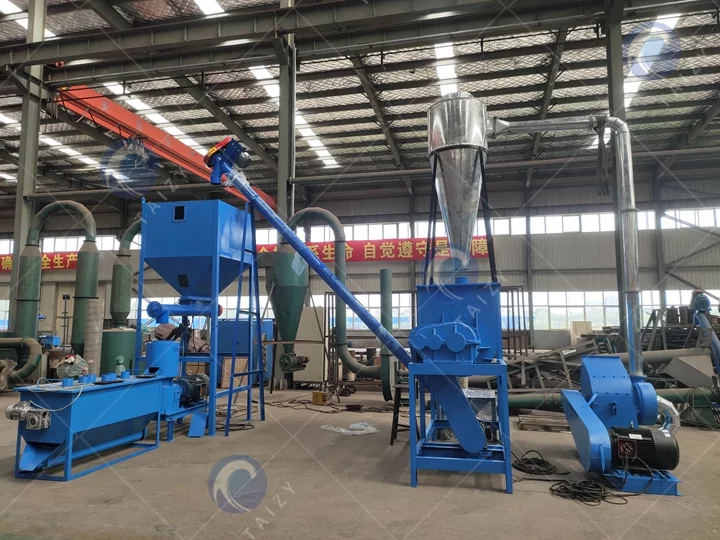
Different materials have different moisture levels, fiber contents, and particle sizes. For example, grains and soybean meal usually require crushing and mixing before pelletizing, while fibrous materials may require additional size reduction.
Therefore, the feed pellet production line should be selected according to the characteristics of your raw materials.
Choose the Production Capacity
Production capacity is another key factor when choosing a feed pellet production line.
A small farm may only need several hundred kilograms of feed per hour, while a commercial feed business may require several tons per hour.
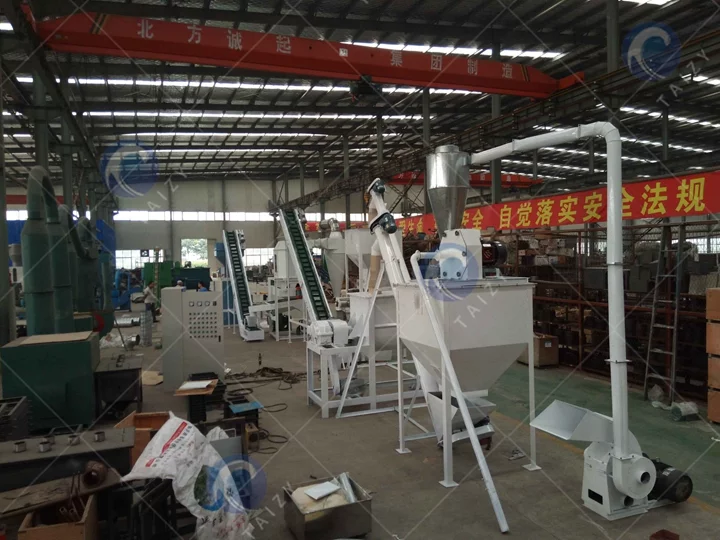
We offer feed pellet production solutions with different capacities, including approximately 80–1200 kg/h, depending on the configuration and equipment model.
When selecting capacity, consider both your current demand and future production plans. Choosing a line that is too small may limit future expansion, while an unnecessarily large line can increase the initial investment and operating costs.
Consider the Type of Animals
The target animals also influence the configuration of the production line.
Feed pellets can be produced for:
- Poultry
- Cattle
- Sheep
- Goats
- Pigs
- Rabbits
- Fish and other livestock
Different animals may require different feed formulas, pellet sizes, and raw material combinations. Therefore, it is important to select a pellet mill and auxiliary equipment that can meet your specific feed production requirements.
For example, poultry feed may require relatively small pellets, while cattle and sheep can use larger pellet sizes.
Check the Main Equipment in the Production Line
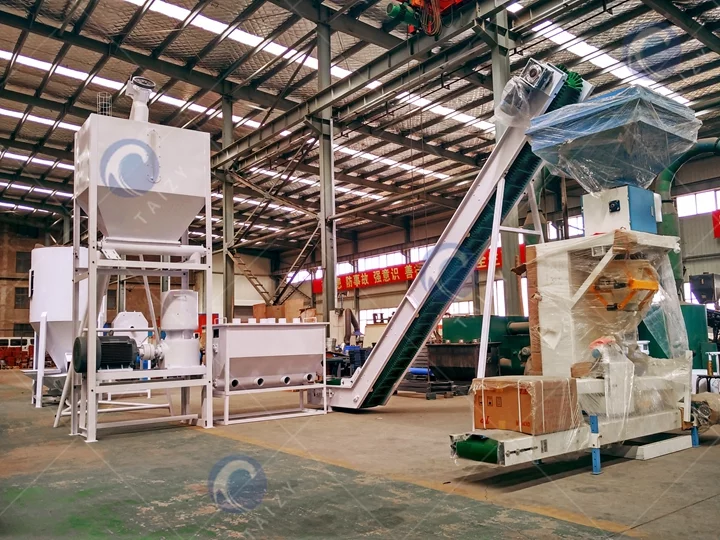
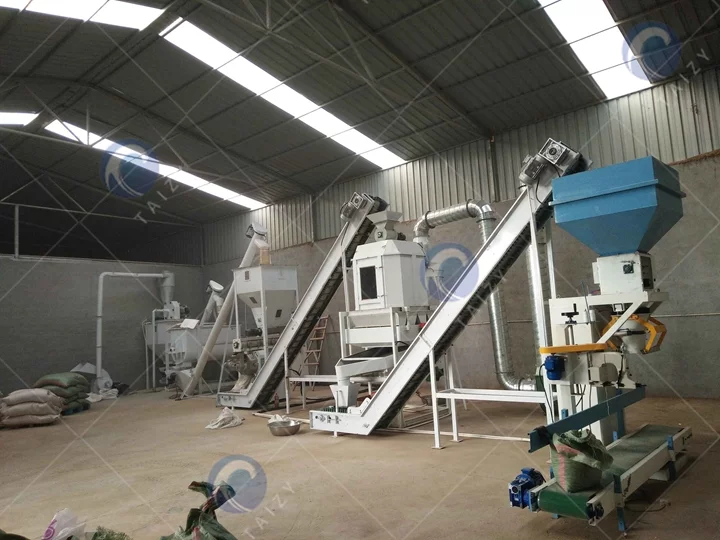
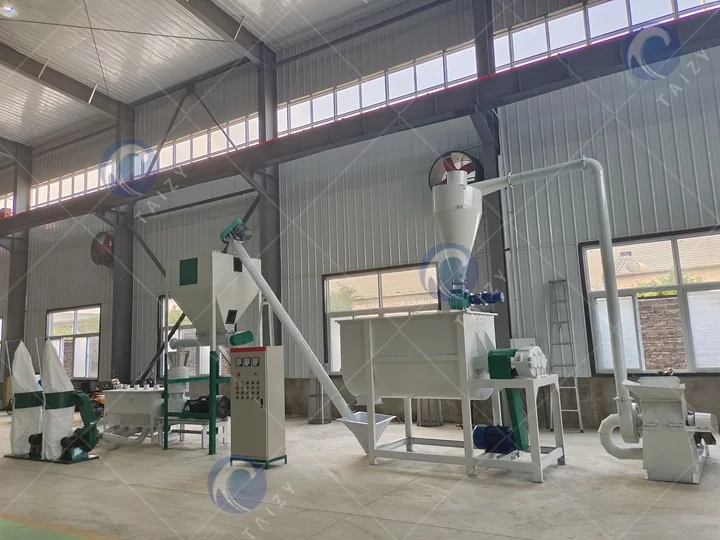
A complete feed pellet production line usually consists of several machines working together.
A typical process may include:
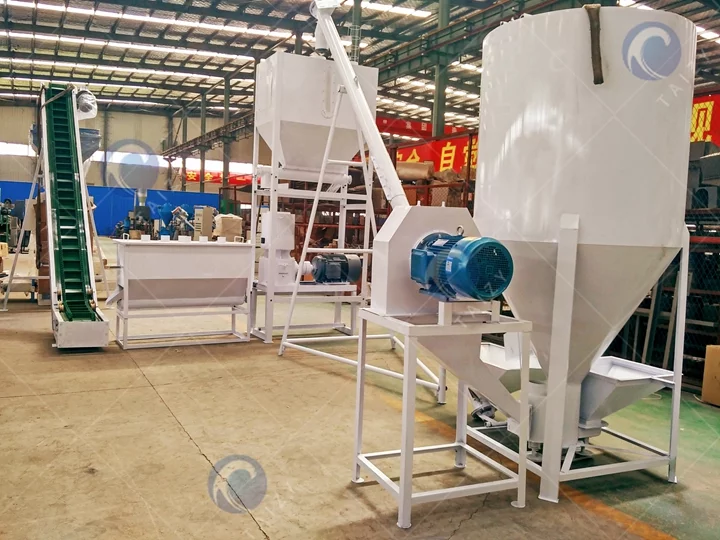
Raw Material → Crushing → Mixing → Pelletizing → Cooling → Screening → Packaging
The main equipment may include:
Feed Crusher
The crusher reduces large grains, stalks, and other raw materials into suitable particles for mixing and pelletizing.
Feed Mixer
The mixer combines different ingredients evenly according to the feed formula. Good mixing helps maintain consistent nutritional composition in each batch.
Feed Pellet Machine
The pellet mill is the core equipment of the line. It compresses the prepared feed mixture into uniform pellets.
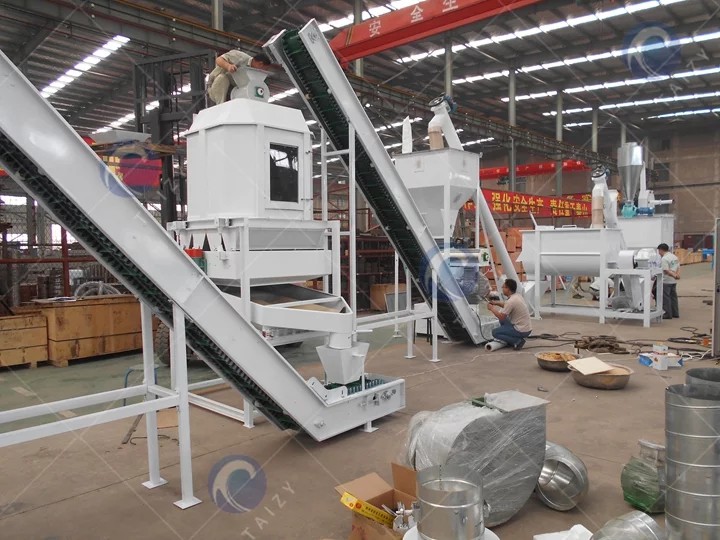
Pellet Cooler
Fresh pellets can have higher temperatures after pelletizing. A cooling machine helps reduce their temperature and prepares the pellets for subsequent handling or packaging.
Screening Machine
A screening machine can separate oversized or broken particles from qualified pellets, depending on the production line configuration.
Packing Machine
For commercial feed production, an automatic or semi-automatic packing machine can improve packaging efficiency and reduce manual labor.
Decide Between a Semi-Automatic and Automatic Line
Your labor availability and production requirements should also be considered.
А semi-automatic feed pellet production line generally requires more manual operation between different processing stages. It can be suitable for small farms or businesses with limited initial investment.
A more automated production line can connect multiple processing stages and reduce manual intervention. This can be useful for commercial feed manufacturers that require stable and continuous production.
The right choice depends on your production scale, labor costs, budget, and desired operating efficiency.
Consider the Available Workshop Space
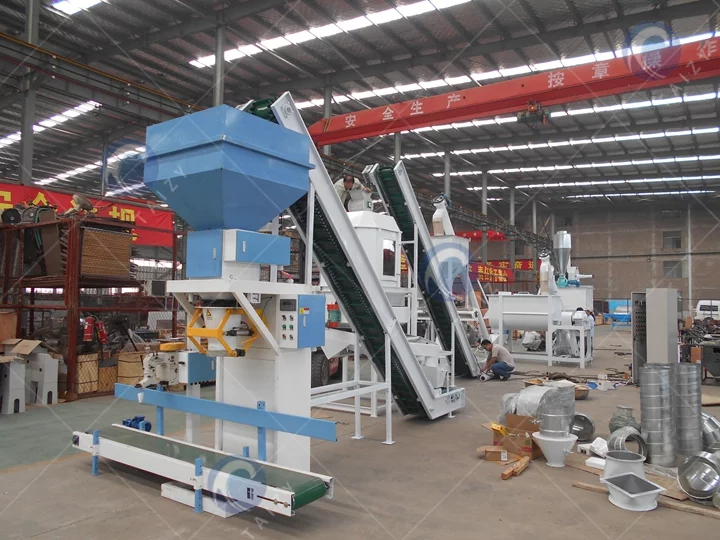
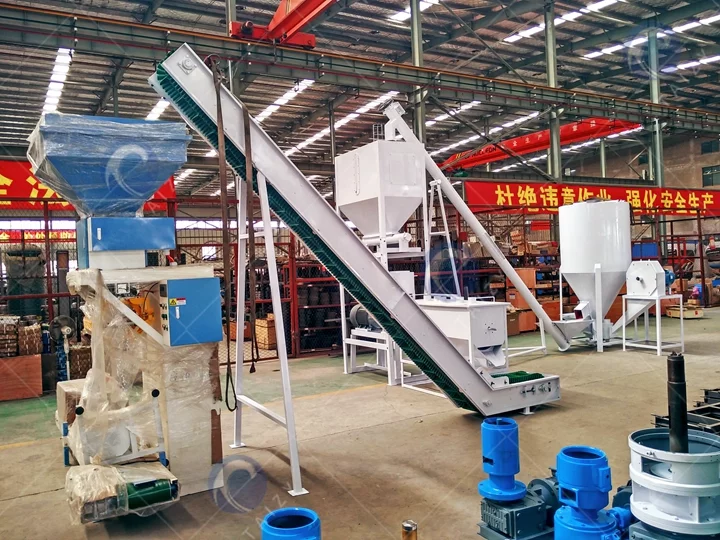
Before purchasing a complete feed pellet production line, measure the available workshop area.
You should consider:
- Machine dimensions
- Raw material storage
- Finished pellet storage
- Material transportation
- Operator working areas
- Maintenance space
A production line should have enough space for workers to operate and maintain the equipment safely. If your workshop is limited, you can discuss the layout and machine arrangement with the manufacturer before ordering.
Consider the Final Feed Pellet Requirements
The final pellet size and quality are also important.
Different applications may require different pellet diameters. The feed pellet machine should therefore be equipped with suitable dies according to the intended feed type.
You should discuss the following requirements with the supplier:
- Pellet diameter
- Pellet shape
- Feed formula
- Производственная мощность
- Pellet moisture
- Final packaging size
If you need to produce different types of feed, ask whether the machine can use different dies or adjust the production configuration.
Choose a Manufacturer with Complete Technical Support
A reliable supplier should provide more than just individual machines.
For a complete feed pellet production line, technical support can include:
- Production line design
- Equipment selection
- Workshop layout
- Machine installation
- Operation guidance
- Spare parts supply
- After-sales service
We can provide customized feed pellet production solutions according to the customer’s raw materials, required capacity, feed type, and workshop conditions.
What Information Should You Provide Before Getting a Quotation?
To help the manufacturer recommend a suitable feed pellet production line, prepare the following information:
- What raw materials will you use?
- What type of animals will the feed be used for?
- What production capacity do you need?
- What pellet diameter do you require?
- What is your available workshop size?
- What is your local voltage and frequency?
- Do you need automatic packaging?
- What is your expected production scale?
The more detailed the information, the easier it is to design a suitable production line.
Choose the Right Feed Pellet Production Line for Your Needs
Choosing a complete feed pellet production line is not simply about selecting the largest or cheapest machine. The right solution should match your raw materials, animal feed requirements, production capacity, workshop space, power supply, labor availability, and investment plan.
For small farms, a compact production line may be sufficient. For commercial feed businesses, a larger and more automated configuration may be more suitable.
If you are planning a feed pellet production project, contact us with your raw materials, required capacity, pellet size, and animal type. We can help you select the appropriate equipment configuration and provide a customized feed pellet production solution.