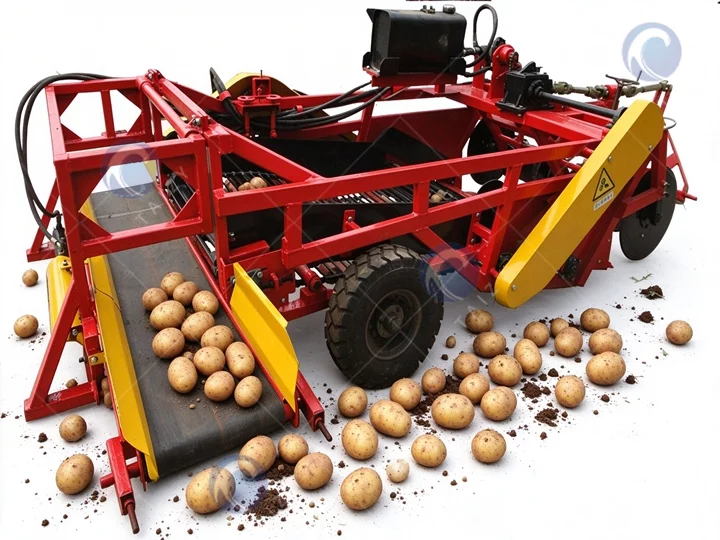
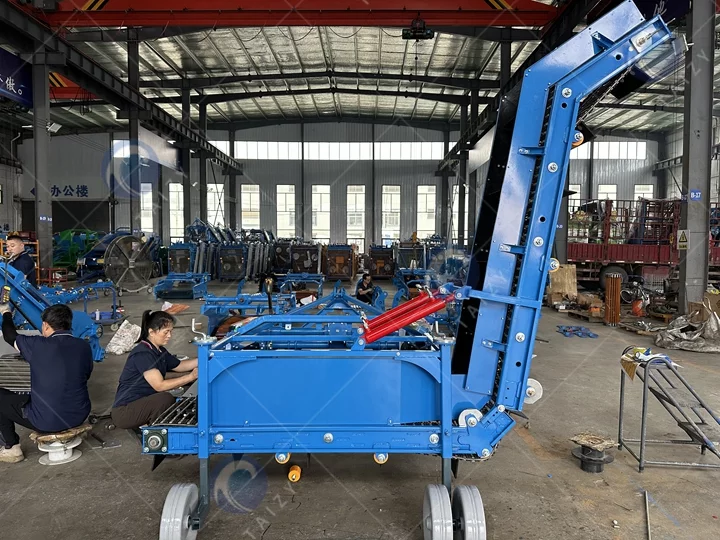
Potato Harvester Machine
| 模型 | 4UQL-1300 |
| 行数 | 2 |
| Working width | 1,300 mm |
| Working depth | 250 mm |
| Matched power | ≥40 hp |
| 净重 | 1,560 kg |
| 容量 | 5–8 mu/h |
| Potato exposure | ≥96% |
| Damage rate | ≤2% |
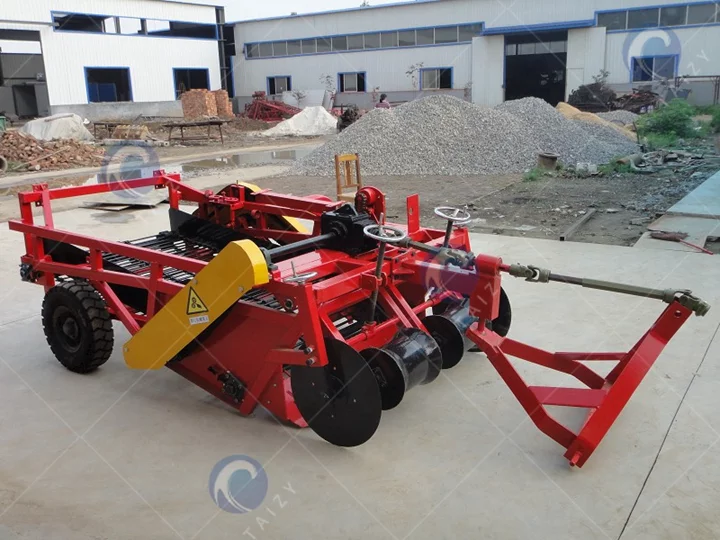
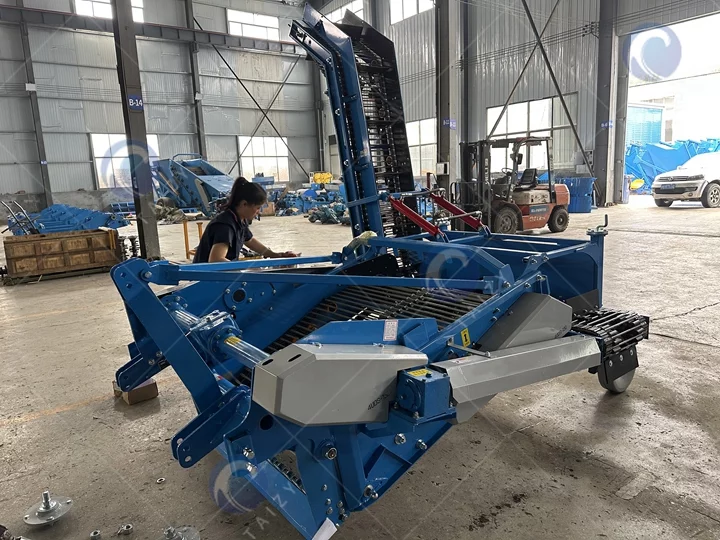
A potato harvester machine is a tractor-driven implement that digs potatoes from the soil, lifts them onto a vibrating chain, separates them from dirt, stones and vines, and then lays them in a narrow windrow or loads them directly into a trailer.
It is designed for potato fields, and with adjusted depth and chain speed it can also handle sweet potatoes and similar tuber crops in loose, stone-free soil.
Capacity depends on the model: compact single-row units match 20–30 hp tractors, two-row units cover working widths from 900 mm to 1,800 mm, and the self-loading combine harvests 5–8 mu per hour — about 0.8–1.3 acres or 0.33–0.53 hectares per hour — with a damage rate of 2% or less.
What Does a Potato Harvester Machine Do?
A potato harvester machine replaces the most labor-intensive part of potato production: lifting the crop without bruising it and without burying it again. One pass performs four jobs that would otherwise require a crew with forks and baskets:
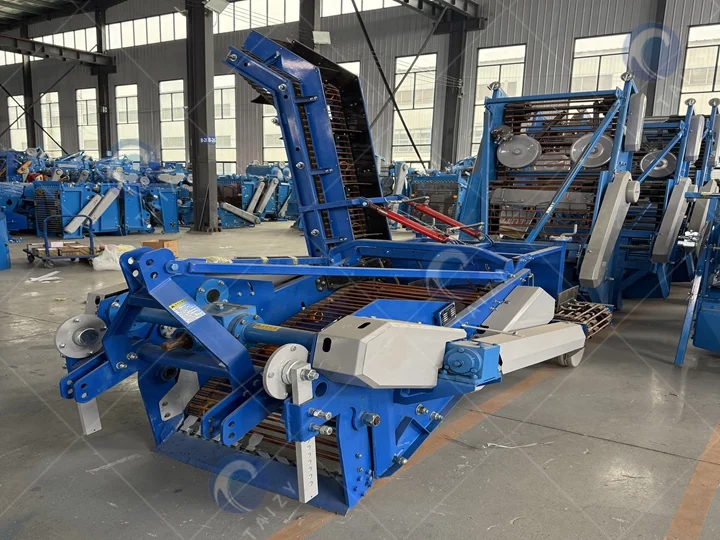
- Cutting and lifting the potato ridge with a replaceable digging share.
- Conveying soil and tubers onto a moving chain or vibrating screen.
- Separating loose soil, clods, stones and vines from the potatoes.
- Windrowing or loading the clean crop for manual collection or direct transport.
The machine is mounted on the tractor’s three-point hitch and driven by the PTO, so it uses the tractor’s power instead of a separate engine. That keeps the unit light, compact and easy to transport between fields.
Potatoes are the primary crop. The same machine is also used for sweet potatoes and other underground root crops when the soil is loose and the digging depth is set correctly.
How Does the Harvesting Process Work?
- Opening the ridge. The digging share enters the soil at a set depth, usually 100–250 mm, and cuts the ridge below the tuber zone.
- Lifting. Soil, potatoes and stones move onto the first section of the chain. The forward motion of the tractor does most of the lifting work.
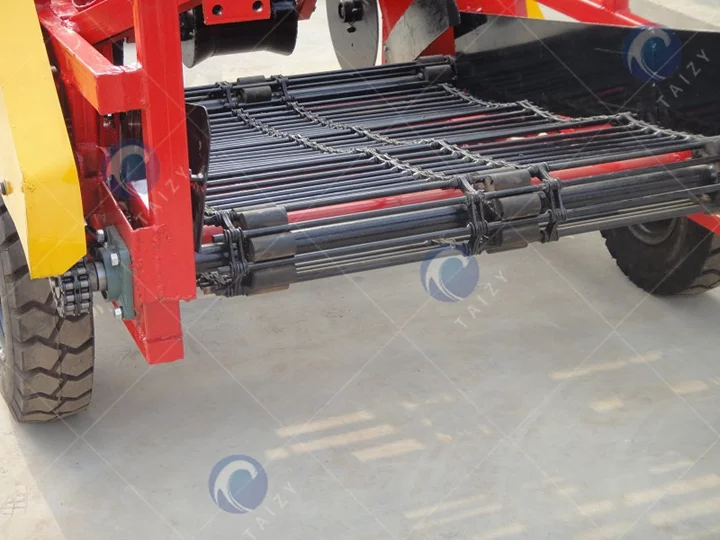
- Separation. The vibrating screen shakes loose soil through the gaps while carrying potatoes and larger stones forward. Correct chain tension and PTO speed determine how clean the sample becomes.
- Discharge. Mounted models deposit potatoes in a narrow row behind the machine for pick-up. The self-loading combine elevates the crop and drops it into a truck or trailer moving alongside, removing the manual collection step entirely.
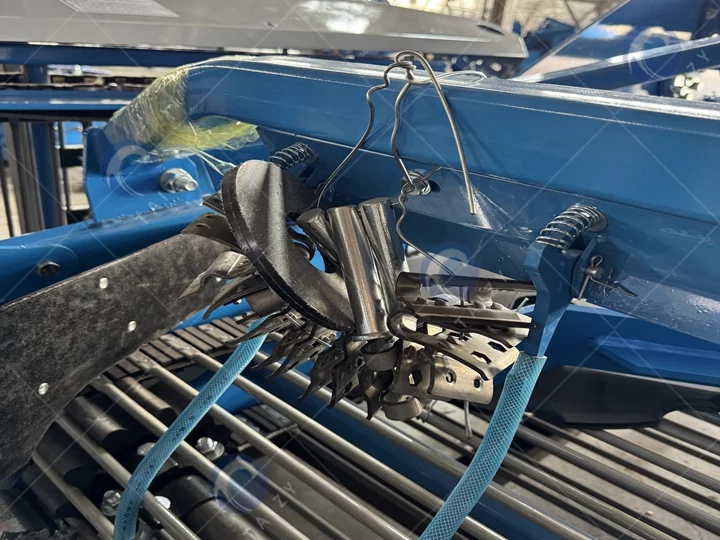
Because separation happens on a moving chain rather than against metal augers, bruising stays low — the rated damage rate is ≤2%, and the potato exposure rate is ≥96% on the combine models.
Model Range: From Small Potato Digger to Self-Loading Combine
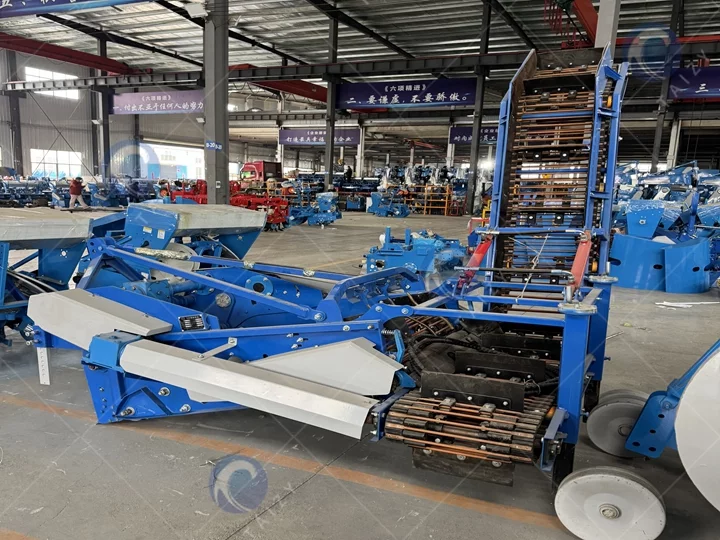
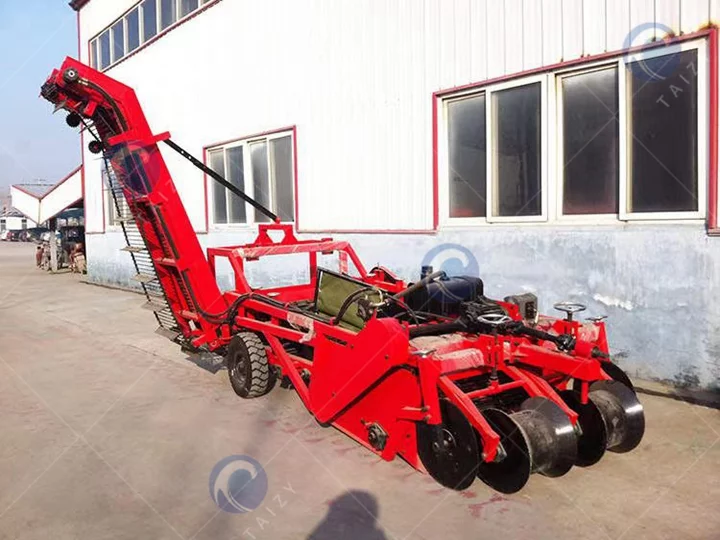
Single-row mounted harvester (4U-1)
A compact potato digger for small farms, greenhouses and trial plots. It works a 600 mm width, fits tractors from 20–30 hp and weighs only 160 kg, so it can be handled by one person and transported on a small trailer. Typical use: one ridge at a time, manual collection behind the machine.
Two-row mounted harvester (4U-2)
The workhorse for commercial potato growers. One frame is offered in four working widths — 900, 1,300, 1,600 and 1,800 mm — with matched tractor power from 40 to 80 hp. The 900 mm version is a popular small potato harvester for row spacing around 65–90 cm; the wider versions cover two rows in a single pass and suit larger fields and higher-horsepower tractors.
Self-loading potato combine (4UQL-1300 / 1600)
The 4UQL series is a potato combine harvester that digs, conveys, separates and loads the crop into a truck in one pass . It is available in 1,300 mm and 1,600 mm working widths, needs 40 hp or 60 hp respectively, and is rated at 5–8 mu/h. This is the model to choose when labor is scarce, fields are large, or potatoes must move straight from the field to the storage shed.
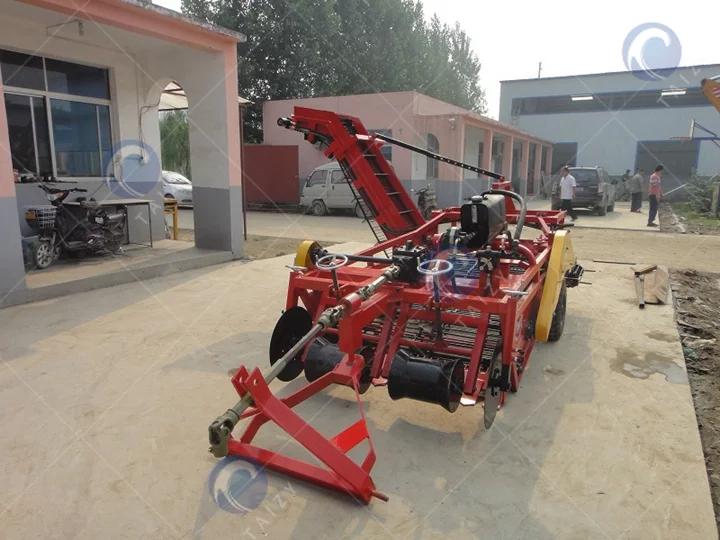
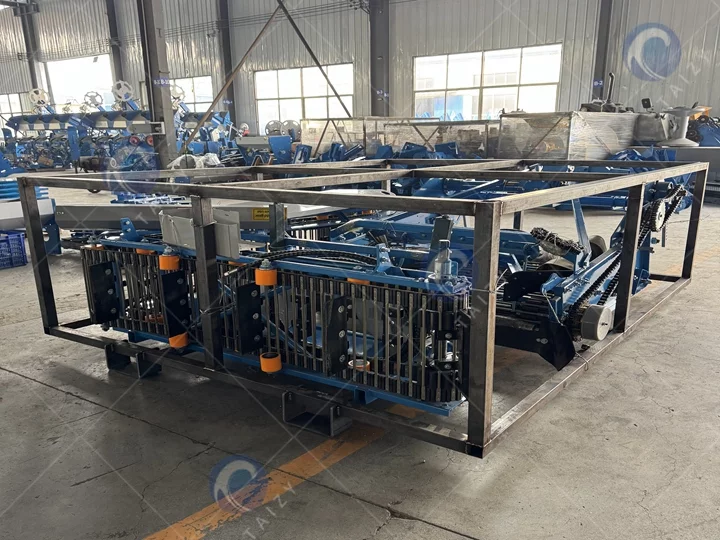
Potato Harvester Machine Full Specifications
Mounted models
| 模型 | 行数 | Working width | Working depth | PTO speed | Matched tractor | 重量 | Hitch |
|---|---|---|---|---|---|---|---|
| 4U-1 | 1 | 600 mm (24 in) | 100–250 mm | 540–720 rpm | 20–30 hp | 160 kg | Cat II 3-point |
| 4U-2 | 2 | 900 mm (35 in) | 100–250 mm | 540–720 rpm | 40 hp | 260 kg | Cat II 3-point |
| 4U-2 | 2 | 1,300 mm (51 in) | 100–250 mm | 540–720 rpm | 50 hp | 335 kg | Cat II 3-point |
| 4U-2 | 2 | 1,600 mm (63 in) | 100–250 mm | 540–720 rpm | 70 hp | 390 kg | Cat II 3-point |
| 4U-2 | 2 | 1,800 mm (71 in) | 100–250 mm | 540–720 rpm | 80 hp | 440 kg | Cat II 3-point |
Self-loading combine
| 模型 | 行数 | Working width | Working depth | Matched power | 净重 | 容量 | Potato exposure | Damage rate |
|---|---|---|---|---|---|---|---|---|
| 4UQL-1300 | 2 | 1,300 mm | 250 mm | ≥40 hp | 1,560 kg | 5–8 mu/h | ≥96% | ≤2% |
| 4UQL-1600 | 2 | 1,600 mm | 250 mm | ≥60 hp | 1,660 kg | 5–8 mu/h | ≥96% | ≤2% |
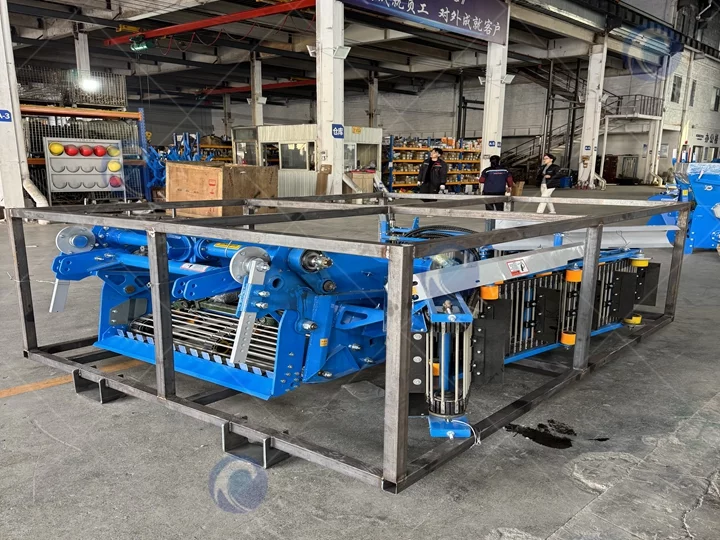
Potato Harvester Machine Capacity and Field Efficiency
The rated capacity of the self-loading combine is 5–8 mu/h , which converts to:
- 0.8–1.3 acres per hour
- 0.33–0.53 hectares per hour
- roughly 25–40 tonnes of potatoes per 8-hour shift, depending on yield
For mounted models, capacity is governed by working width, forward speed and field efficiency. A simple planning formula is:
Theoretical area rate (ha/h) = working width (m) × speed (km/h) ÷ 10
A 1.3 m two-row machine at 4 km/h therefore moves about 0.52 ha/h in theory; at 75–80% field efficiency, expect 0.39–0.42 ha/h, or roughly 5.8–6.3 mu/h. A 1.8 m machine at 5 km/h has a theoretical rate of 0.9 ha/h.
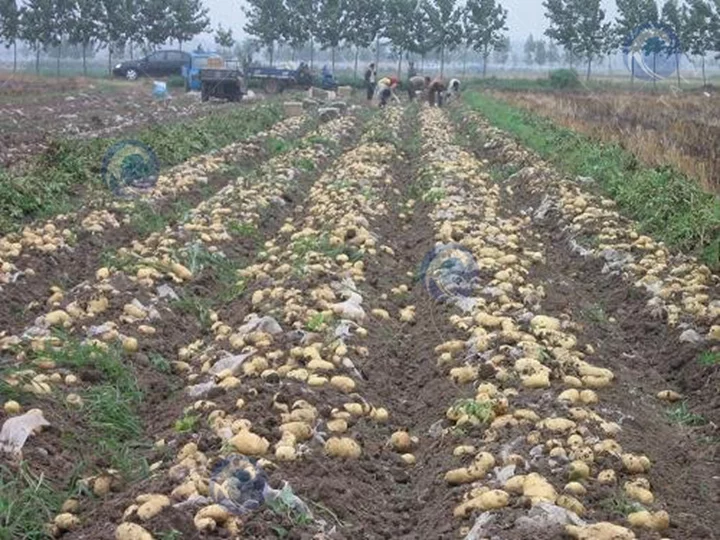
Actual output falls when:
- Soil is wet and sticky, so it clings to the chain instead of falling through.
- Fields contain many stones or large clods that travel with the crop.
- Rows are not straight, increasing steering corrections and overlap.
- Turn time at the headland is long, or trailers are not positioned for continuous loading.
- Vine growth is heavy and blocks the intake.
Tractor Compatibility and Setup
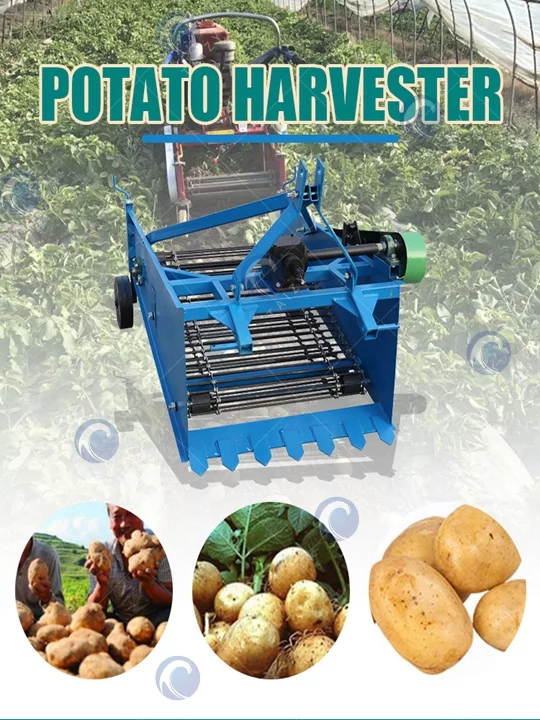
- Hitch: All models use a Category II three-point hitch. Category II is wider than Category I, so check the lower hitch pin spacing and the upper pin diameter before ordering — a Cat I tractor will not mount the machine without adapters.
- PTO: 540–720 rpm at the tractor PTO. Run the recommended speed; too slow reduces separation, too fast increases bruising and chain wear.
- Power: 20–30 hp for the single-row 4U-1, 40–80 hp for the two-row 4U-2 range, and 40 hp / 60 hp minimum for the 4UQL-1300 / 1600.
- Row spacing: The 1,300 mm and 1,600 mm models suit the common 65–90 cm potato row spacing. Match the working width to your planter so the share runs centred on the ridge.
- Wheel track: Set the tractor wheels to run between rows, not on the ridges, to avoid compacting the crop.
Potato Harvester Machine Design Features That Protect the Crop
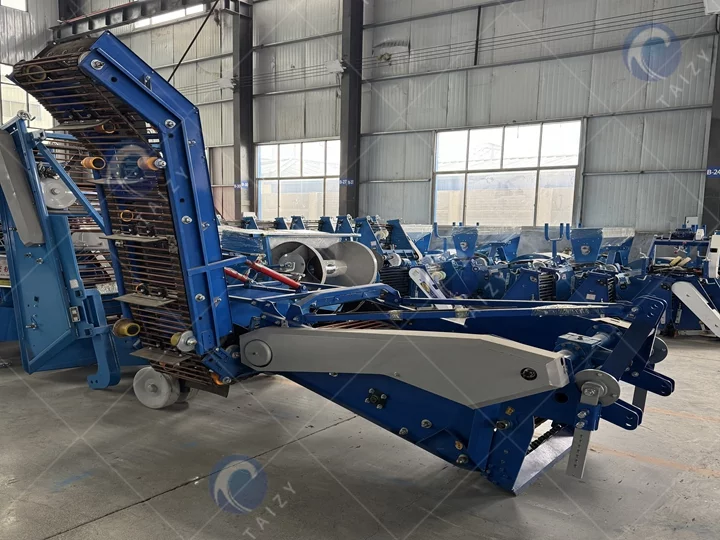
- Vibrating screen and chain separate soil gently and keep the potatoes moving without impact.
- Protective cover shields the drive and reduces crop loss over the discharge end.
- Heavy-duty traction frame and suspension pins keep the unit stable in uneven fields.
- Tail wheel support frame maintains a consistent digging depth and reduces bounce.
- PTO drive with shear protection absorbs shock loads when the share hits stones.
- Replaceable wearing parts — shares, chain links, bearings and rubber flight boards — keep maintenance simple and inexpensive.
Why Growers Choose This Potato Harvester Machine?
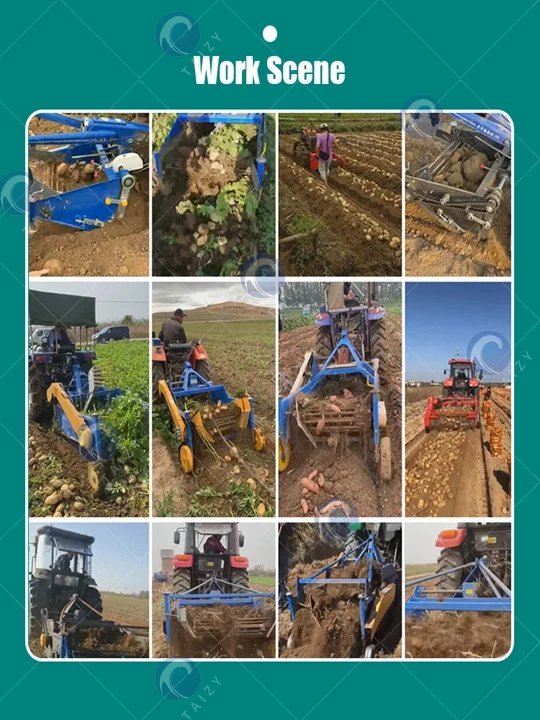
- One-pass harvest. Digging, separation and loading happen in a single operation, cutting the number of passes over the field.
- Low bruising. A ≤2% damage rate protects marketable yield and storage quality.
- Less labor. The self-loading combine removes manual picking and basket handling, the largest cost in small and medium potato operations.
- Weather window. Harvesting several times faster than manual lifting reduces the risk of crop loss when rain threatens.
- Lower fuel and repair costs. PTO-driven implements use the tractor you already own instead of a separate engine and drive train.
- Custom widths. Working widths can be built to match local bed spacing and tractor size.
How to Choose the Right Potato Harvester Machine?
- Count your rows and measure row spacing. One row, two rows, 65 cm or 90 cm — the machine must straddle the ridges.
- Check tractor horsepower and hitch. A 40 hp tractor suits the 900–1,300 mm two-row models; 70–80 hp is needed for 1,600–1,800 mm.
- Estimate daily acreage. For 20–40 mu per day, a mounted two-row unit is enough. For larger areas or labor shortages, choose the self-loading combine.
- Describe the soil. Sandy loam separates easily; clay and stones require slower speeds, more chain tension and more frequent share replacement.
- Decide how potatoes leave the field. Windrow for manual collection, or load directly into a trailer with the combine.
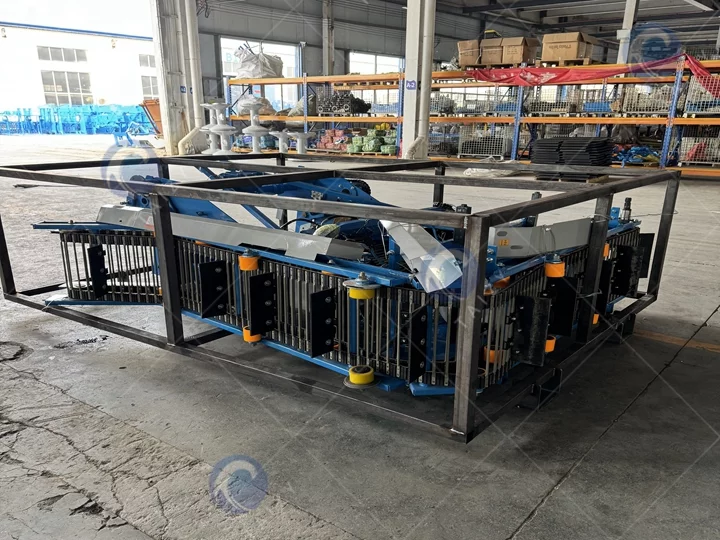
- Confirm spare parts and shipping. Ask for the accessory list, packing dimensions and container loading plan before you buy.
Potato Harvester Machine Maintenance and Operating Tips
- Check chain tension and all bolts after the first hour of work, then daily.
- Grease bearings and the PTO shaft every 8–10 hours of operation.
- Replace worn shares early; a blunt share increases draft, fuel use and tuber damage.
- Harvest when soil moisture is moderate. Wet soil blinds the chain; dry soil increases clod load.
- Keep the PTO at rated speed and drive in a low gear with steady forward speed.
- Wash and oil the chain before winter storage, and store the machine on blocks to protect the tyres and frame.
Request a Quote for Your Potato Harvester Machine
Tell us your field size, row spacing, tractor horsepower, soil type and target daily output. We will recommend the right model — single-row, two-row or self-loading combine — and send a factory-direct quotation with packing dimensions, accessory list and delivery terms.
We also have 花生收获机 available for your selection, feel free to inquire for prices. Send your requirements now and get a model recommendation within one working day.